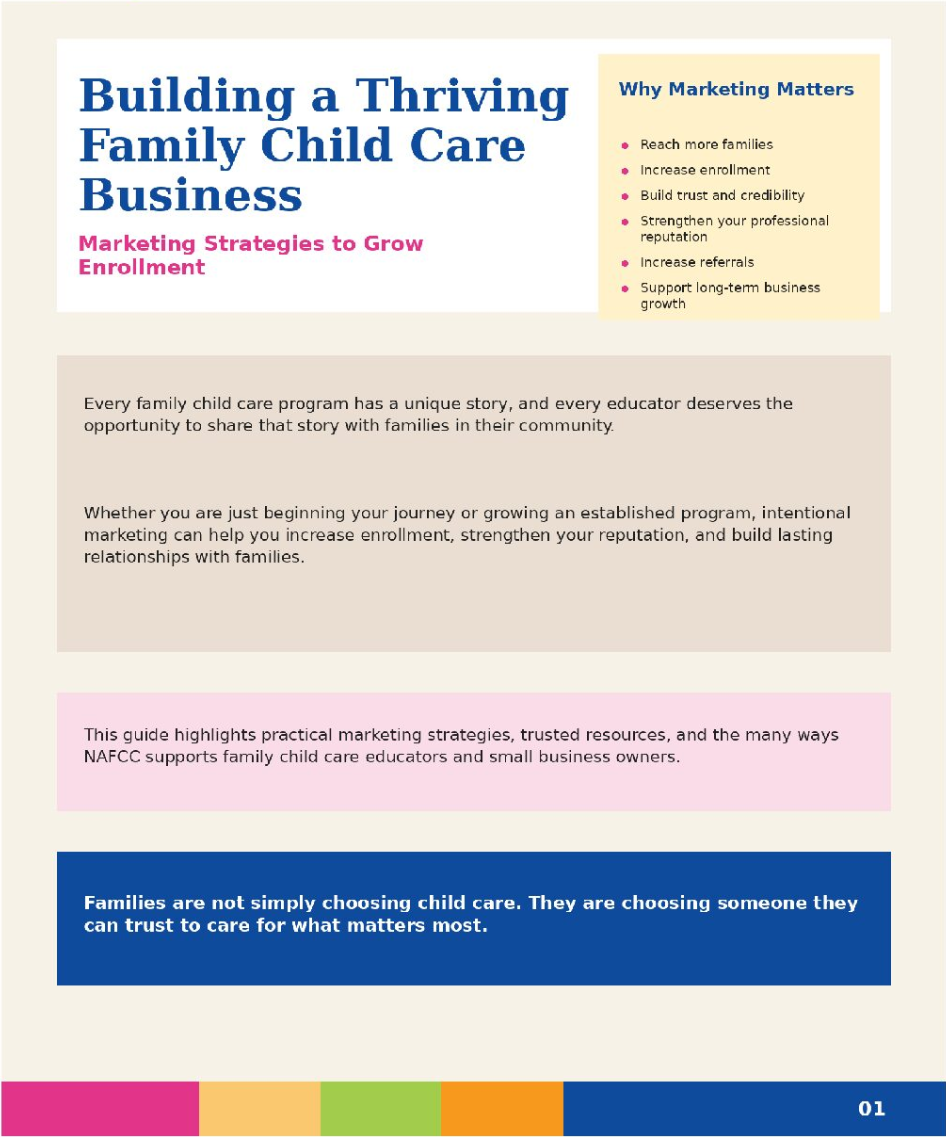
Family Child Care Advocates and Supporters,
Summer may bring a little more time with family and a change of pace, but federal child care policy isn’t taking a break. Decisions being made in Washington right now can have a real impact on your program, the families you serve, and the future of family child care.
We know it can be hard to keep up with policy changes while running a child care business and caring for children every day. That’s why NAFCC is here with a brief overview to keep you informed and ensure your voice is part of the conversation. We also invite you to complete our annual survey and share your experiences, priorities, and perspectives to help inform NAFCC’s work and advocacy.
Here are a few federal developments we’re watching, along with what they could mean for you.
CONGRESS: August Recess Is an Advocacy Opportunity
Both the House and Senate are currently in recess. The House is expected to return at the end of August, while the Senate is expected to return in September. When Congress returns, lawmakers will need to address federal government funding, including funding for the Child Care and Development Block Grant (CCDBG) and Head Start. The House’s current funding proposals include only a $10 million increase for CCDBG and Head Start—FAR short of what is needed to support families and the child care workforce.

(Pictured: Vantionette Savage, NAFCC State Representative, Board Member and State Affiliate, Nadia S. Alston, District Director for U.S. Representative Deborah Ross (NC-02), and lead advocate Stephanie Shell, Little Captains Academy, Raleigh, NC.)
Why it matters:
Federal funding decisions affect access to child care, subsidy payments, and the resources available to educators. While Members of Congress are home, use this opportunity to tell them what family child care needs:
- Significant investments in CCDBG
- Stable and adequate payments
- Affordable child care for families
- Policies that recognize the unique and essential role of family child care
This year, NAFCC connected FCC educators with 11 congressional district offices in 10 states through our third annual August Advocacy is Action Campaign.
Head Start: Major Changes Proposed
The Administration has proposed a sweeping rewrite of Head Start regulations that would remove or change more than 1,400 requirements. The proposal includes changes to staff-to-child ratios, group sizes, staff qualifications, compensation, and health, mental health, and dental services. The proposed rule will replace many federal Head Start requirements with state licensing standards. Last week, NAFCC released a response with a clear position: NAFCC supports reducing unnecessary administrative burdens and giving educators flexibility, but we cannot sacrifice the quality and comprehensive support that have made Head Start such an important part of our early childhood system. As changes are considered, we need to ensure family child care is not an afterthought, but is meaningfully and equitably included.
Why it matters: This is a proposed rule, not a final decision. The public comment period is open through October 6, 2026. NAFCC has joined early childhood partners in raising concerns about changes that could weaken quality and support for children and families. You can find resources on the Head Start proposed rule from Start Early here.
Urge HHS to Protect Head Start
The U.S. Department of Health and Human Services has proposed significant changes to the Head Start Program Performance Standards. Now is the time to make your voice heard.
Public comments are due October 6, 2026. NAFCC is sharing a simple guide with everything you need to submit a public comment, including step-by-step instructions and a sample comment you can personalize.
Your experience matters. Take a few minutes to tell HHS why Head Start matters to children, families, educators, and communities.
Immigrant Families: Uncertainty Continues
Federal immigration policies continue to create fear and uncertainty for many families.
Updated guidance from CLASP explains eligibility for federally funded child care and early education programs, including CCDF and Head Start, and emphasizes the importance of accurate information for mixed-status families.
Why it matters: Educators should consider having policies and procedures in place that protect and support immigrant families. Families also need access to reliable information and having resources clearly available can provide much needed support. While you are encouraged to find local resources that create safe, welcoming spaces for all children and families, resources from national partners can be a starting point. This toolkit from Protecting Immigrant Families can help you get started.
CCDF: State Administrators Need to Hear from YOU
Earlier this year, HHS changed federal CCDF requirements, including rescinding the federal requirement that states limit family copayments to 7% of household income, provide enrollment-based payments, prospective payments, and grants and contracts for specific services. States may continue these policies, but they are no longer federally required.
Why it matters: According to NAFCC’s Annual Survey Report, 78% of family child care educators who responded participate with child care subsidy programs in their state. The impact of the federal final rule will vary state by state. Changes to payment policies can affect the stability of family child care businesses and families’ ability to afford care. Now is the time to connect with your NAFCC State Representative and NAFCC State Affiliate to advocate for state policies that require stable, equitable, and timely payments for family child care educators.
What We Are Watching
In the coming months, we will continue monitoring:
Congress
- FY2027 funding for CCDBG and Head Start
- Continuing resolution and budget negotiations
- Child care legislation affecting family child care
Administration
- The proposed Head Start regulations
- CCDF proposed rule changes and implementation
- Program integrity and “fraud” initiatives
- Policies affecting immigrant families
The Courts
- Legal challenges affecting federal child care and family policies
NAFCC Leadership Weighs In on Proposed Head Start Changes
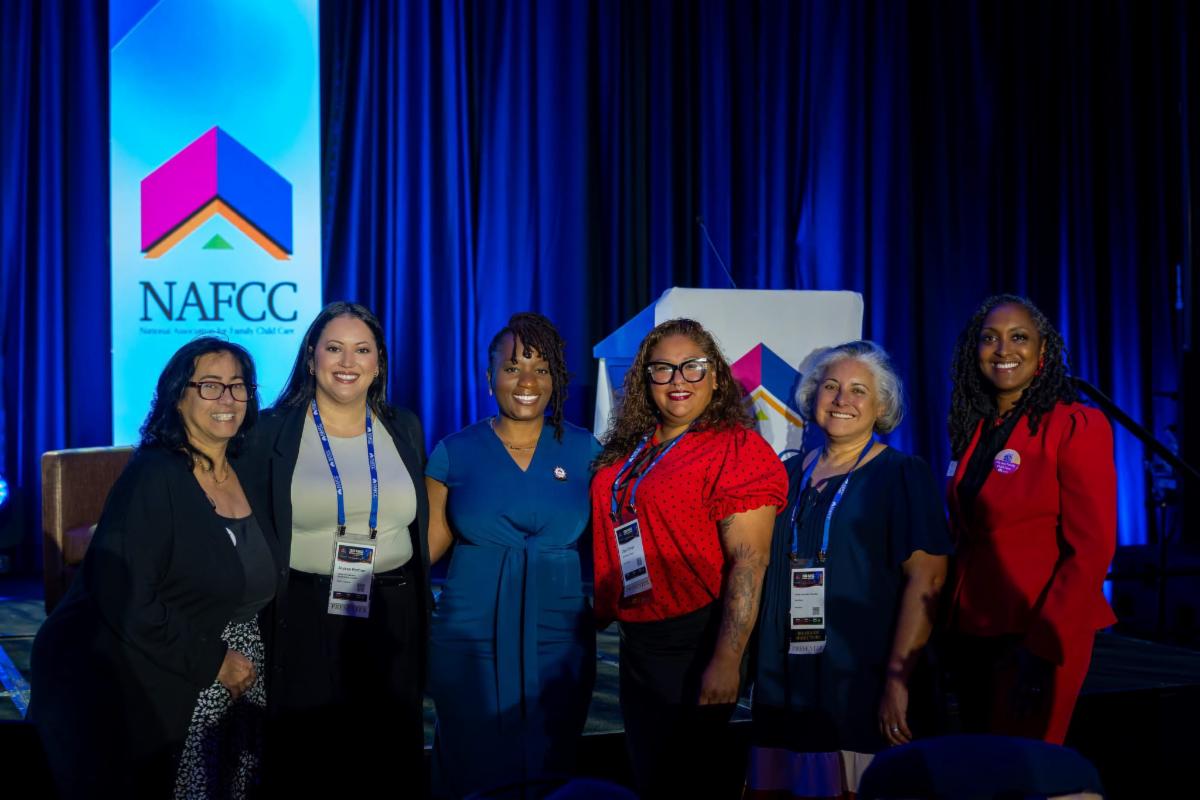
NAFCC Executive Director Erica Phillips and Board President Yvette Sanchez Fuentes were featured in NPR’s national coverage of proposed changes to Head Start regulations, sharing perspectives on what the changes could mean for children, families, and the early childhood field.
NAFCC Director of Policy and Movement Building Eboni Delaney, a former Head Start child who later served as a Head Start center and regional director, shares a deeply personal perspective on the proposed changes to the program.
“I am a product of Head Start, and Head Start did not change my life by doing less.”
In Their Own Words: When Partnership Stops Working for Family Child Care
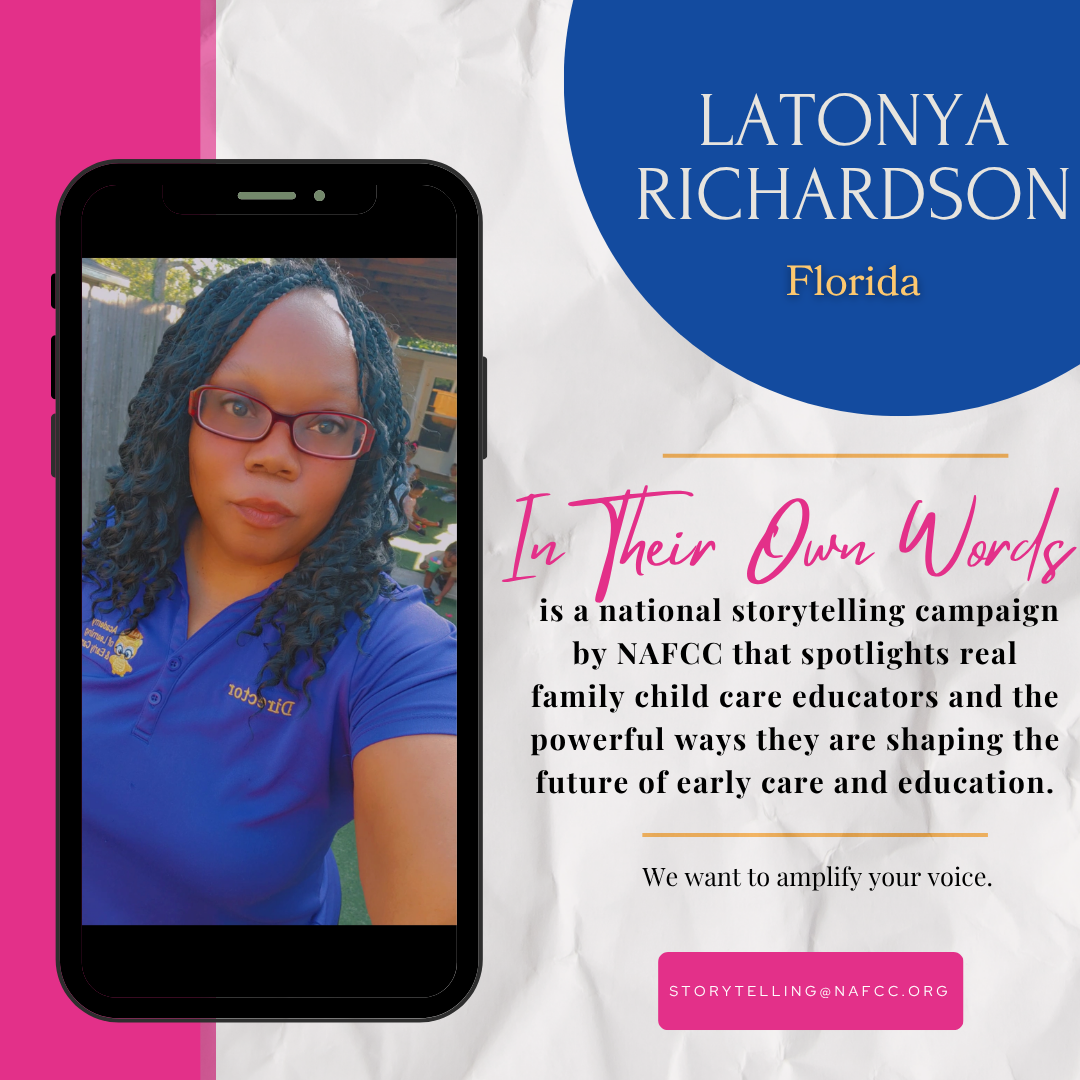
For 14 years, LaTonya Richardson of Florida partnered with Early Head Start, gaining opportunities that helped her become nationally accredited, earn her associate’s degree, achieve a Five-Star quality rating, and grow her business. But as staffing, administrative, and operational requirements changed, LaTonya ultimately made the difficult decision to leave the partnership.
Her story raises an important policy question: Are Early Head Start partnerships designed and funded in ways that allow family child care educators to participate sustainably?
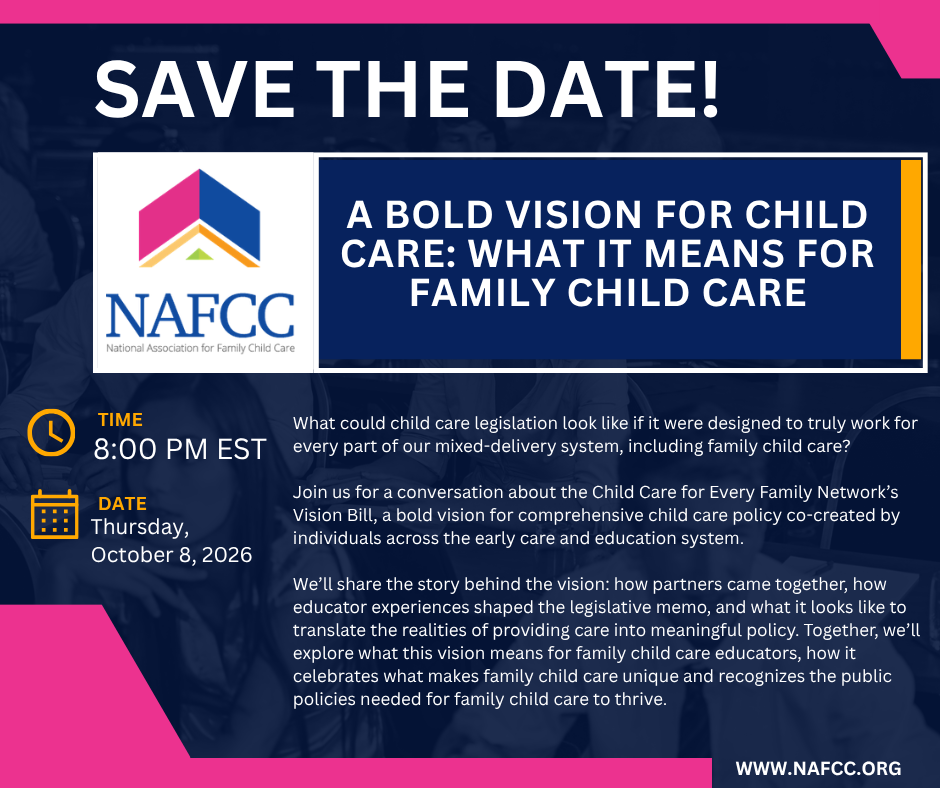
COMPLETE NAFCC’s Annual Survey
Your voice matters—and now is the time to make it heard! Complete the NAFCC Annual Survey for a chance to win $150. Winners will be selected and announced every week through August 28!
The survey takes about 15 minutes to complete, and your responses play a critical role in shaping the NAFCC Annual Report. More importantly, your insights help us connect the data with the real stories, experiences, and challenges of family child care educators and business owners across the country.
Together, we can elevate the voices of family child care and advocate for the support our profession deserves.
Help Bring Family Child Care to SXSW EDU

NAFCC has submitted two proposed panels for SXSW EDU 2027, and community voting is now open! Your vote can help elevate the voices of Family Child Care educators and bring these important conversations to one of education’s largest national stages.
Vote for both panels by August 23:
Click here to vote for Bending the Arc: The Power of Family Child Care.
Discover how family child care shapes children’s learning, strengthens communities, and advances educational equity through storytelling, policy innovation, and educator leadership, including New Mexico’s universal child care model.
Click here to vote for The Hidden Solution to Global Education: Home-Based Child Care
Explore how home-based child care is shaping learning, strengthening families, and influencing global policy through insights from leaders representing 11 countries and the Global Home-Based Childcare Alliance.
Please vote! Every vote helps raise the visibility of Family Child Care and its essential role in supporting children, families, and communities.

Make Your Voice Heard
Congress is home. This is your moment to speak up.
Share your story.
Tell policymakers what it takes to operate your family child care business and what you need to stay open and serve families. NAFCC August Advocacy is Action Campaign resources can be found here.
You don’t have to be a policy expert. You are the expert on your experience.
Stay informed. Stay connected. Keep advocating.
Family child care is essential, and federal policy should treat it that way.