Written by Eboni Delaney, Director of Policy and Movement Building
For Kathryn Baker, family child care began with family.
After graduating from Marshall University with a Bachelor of Business Administration, Kathryn began managing a retail store. Meanwhile, her husband had started caring for friends’ children while their parents worked. What began as helping a few families quickly grew into something much larger. “We soon realized that I needed to quit my job and start a career in child care,” Kathryn shared. “So that is what I did in 1991.”
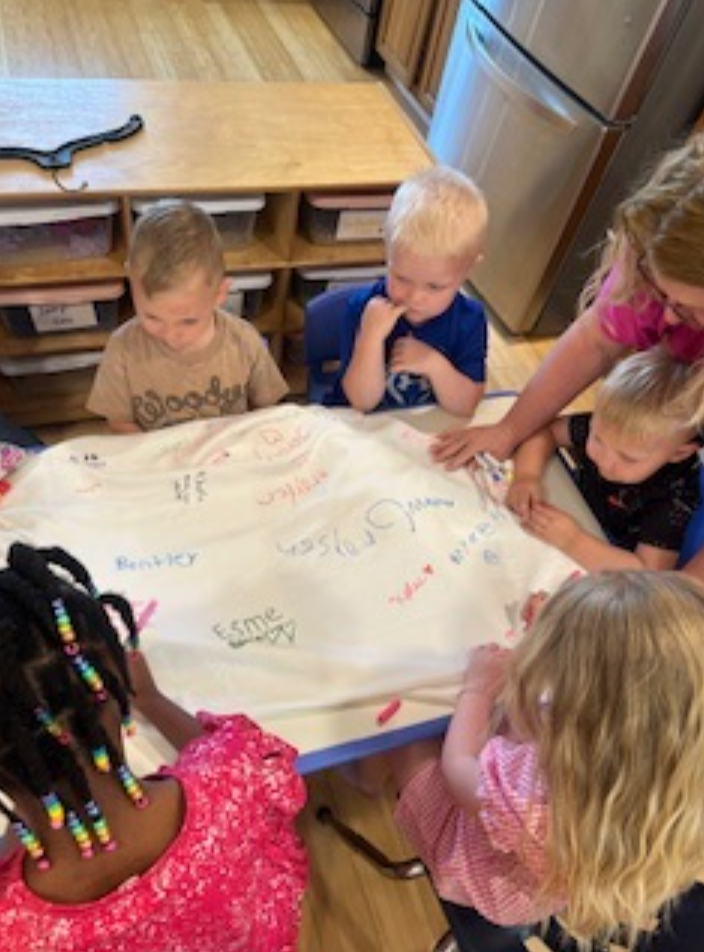
More than thirty years later, Kathryn is still serving children and families through family child care in West Virginia. Over the decades, she has cared for children from infancy through adolescence, often becoming part of the fabric of their families’ lives. “I have been fortunate enough to have a lot of my children start as infants and age out at 13,” she said. Since the beginning, Kathy has been a fierce advocate for family child care.
“I have been advocating for family child care for as long as I can remember,” Kathryn said.
One of her earliest advocacy efforts began when providers learned they could lose compensation for evening care services. Kathryn joined five other family child care educators at an early childhood meeting to explain how the decision would negatively impact both educators and the families relying on evening child care.
Kathryn serves as the NAFCC State Representative for West Virginia and has spent years advocating for family child care educators across the state. Most recently, she joined fellow educators, child care centers, and partners through the West Virginia Association for Young Children (WVAYC) in successfully advocating for the passage of HB 4191 in West Virginia.
The legislation was especially important as educators worked to protect the financial stability of child care programs and families across West Virginia amid growing uncertainty surrounding federal rollbacks.
HB 4191 prevented providers from returning to stricter attendance-based payment requirements that could further destabilize already fragile income for programs serving subsidized families, redefined full-day school-age care, and created tax credits for employers providing child care support.

For Kathryn, the bill represented years of persistence from educators who continued showing up, organizing, and advocating for the future of child care in West Virginia.
“As a group, we have been going to the Capitol and advocating for child care for many years now, and this is the first bill that has passed,” she shared. “We are hopeful that this is the start of more bills being passed in the future.”
For many family child care educators, the passage of HB 4191 reflected growing recognition of the realities of operating child care programs and the critical role child care plays in supporting working families, local businesses, and the broader economy.
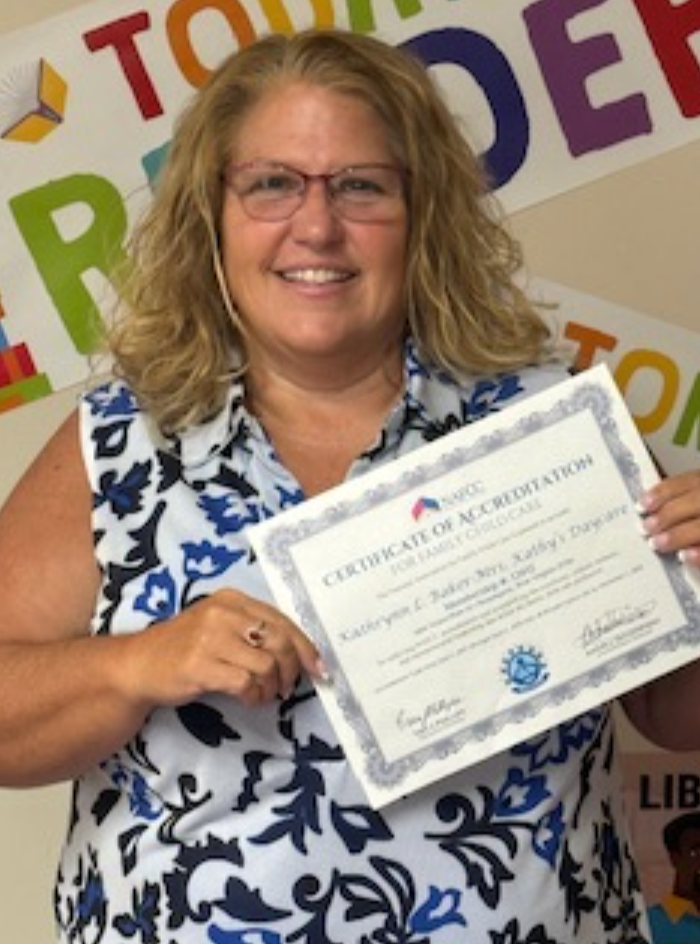
Kathryn has maintained National Association for Family Child Care (NAFCC) Accreditation for twenty years and continues to focus on creating what she describes as. Like many family child care educators, Kathryn’s role has always extended far beyond daily routines and supervision. The depth of relationships built in family child care often allows educators to notice subtle changes in children long before others do.
One child in Kathryn’s program began walking differently around age 2. Something about his gait concerned her. Before bringing it to the child’s parent, she first asked her husband if he had noticed it too. He did.
Kathryn encouraged the family to schedule a doctor’s appointment. The doctor initially told them nothing was wrong.
“Another month went by, and it was getting worse,” Kathryn shared. “He was falling all the time now.”
Again, she encouraged the parent to return to the doctor and specifically explain that the child care provider believed something was wrong with the child’s gait. This time, doctors ordered additional testing. The child was diagnosed with a brain tumor the size of a golf ball. “Thankfully, they were able to remove it, and he is doing great,” Kathryn shared. “He just aged out of my program in March at 13 years old.”
But Kathryn continued noticing changes over the following months. The child’s walking worsened, and he began falling frequently.
For Kathryn, stories like this reflect the reality of family child care. Educators are not simply watching children for a few hours a day. They are deeply connected to children’s development, behaviors, routines, and well-being across years of care. The NAFCC 2025–2026 Annual Survey found that family child care educators frequently serve children across multiple developmental stages while building long-term, relationship-based care environments rooted in consistency and trust.
That same commitment extends into her advocacy and leadership work across West Virginia.
Across every part of Kathryn’s story, one thing remains clear: family child care is deeply personal work. It is built through long-term relationships, trust, advocacy, and an unwavering commitment to children and families. Whether mentoring new educators, advocating for policy change, or recognizing when something is wrong with a child long before others do, Kathryn’s work reflects the lasting impact family child care educators have in communities every single day.