A Message from NAFCC Policy Team
 Dear Family Child Care Advocates,
As we continue moving through 2026, the policy landscape impacting family child care continues to shift rapidly at both the state and federal levels. Across the country, family child care educators are navigating conversations around subsidy systems, workforce sustainability, universal child care, licensing, benefits, and the long-term future of home-based care.
At NAFCC, our policy and movement-building work remains focused on ensuring family child care educators are not only included in these conversations but recognized as essential voices shaping them. Through advocacy, storytelling, educator engagement, rapid response efforts, and policy leadership, we are continuing to push for systems that reflect the realities, strengths, and needs of family child care.
This newsletter is designed to keep you informed, connected, and equipped with updates, opportunities for action, and resources to support advocacy at every level.
Thank you for continuing to lend your voice, expertise, and leadership to this work.
In solidarity,
Eboni Delaney
Interim Director of Policy and Movement Building
National Association for Family Child Care (NAFCC)
Daphne Alsiyao
Policy Strategist
National Association for Family Child Care (NAFCC)
State of Affairs
Federal child care policy continues to shift as the administration and Congress advance major changes affecting early childhood programs and funding. Recent updates include the final Child Care and Development Fund (CCDF) rule rolling back several 2024 requirements tied to payment practices and family eligibility protections, a new Head Start Notice of Proposed Rulemaking (NPRM) that would remove compensation and benefit standards for Head Start staff, and continued conversations around fraud and program integrity in public benefit programs. Lawmakers are also beginning FY2027 appropriations negotiations that will determine future federal investments in the Child Care and Development Block Grant (CCDBG), Head Start, and other early childhood programs.
These ongoing federal discussions highlight the need for policies that build stronger supports for family child care educators. NAFCC’s new brief, Benefits, Stability, and the Future of Family Child Care: Building Real Access to Healthcare and Retirement, outlines the challenges family child care educators face in accessing affordable health care, paid leave, retirement savings, and other essential benefits, while offering policy recommendations to strengthen long-term stability and sustainability for the family child care workforce.
As federal guardrails are reversed and more responsibility shifts to states, state-level advocacy is increasingly important. Decisions made at the state level will continue to shape child care payment practices, licensing rules, workforce supports, and access to child care assistance through CCDF. To support your advocacy efforts, NAFCC has created talking points and advocacy tips to use in state-level planning and policy discussions.
For more information about recent federal policy changes, check out our latest policy bulletin.

State Policy Watch
New Mexico Invests in Early Educator Compensation
New Mexico has made a significant investment in its early childhood workforce, allocating $60 million in the state budget to support a wage scale and career lattice for early educators. This funding is designed to create a structured compensation system tied to experience and education, helping to address long-standing pay inequities across the field.
This approach reflects a growing recognition that stabilizing the workforce requires clear pathways for advancement and compensation that reflect the complexity and value of early care work.
New York Builds Toward Universal Child Care
New York’s FY 2027 state budget includes major investments in child care and early education that could expand opportunities for family child care programs across the state. The budget adds $1.7 billion in new funding for child care and pre-K programs, expands child care assistance for more families, and supports efforts to build a more universal child care system. This investment creates potential for increased enrollment, more stable subsidy participation, and greater demand for early childhood providers, including family child care educators.
Maine Protects Child Care Payment Stability
Maine has taken proactive steps to protect child care providers by passing legislation that safeguards improved subsidy payment practices established under recent federal guidance.
As other states face uncertainty or consider rolling back payment reforms, Maine’s action ensures continued use of more stable payment approaches, helping providers maintain consistent revenue and reduce financial volatility.
The bill was signed into law this week, reinforcing the state’s commitment to sustaining child care systems even amid shifting federal and political conditions.
Minnesota Advances Early Childhood Workforce Investment
Minnesota continues to build on its commitment to strengthening the early childhood workforce through targeted investments and system reforms.
Recent efforts focus on improving compensation, expanding workforce supports, and addressing long-standing inequities in pay and access to benefits. These strategies are part of a broader approach to stabilize the workforce and ensure long-term sustainability of child care programs.
Minnesota’s work highlights the importance of coordinated policy solutions that address both workforce conditions and system infrastructure.
States to Watch: Virginia, Nebraska, and Maryland
Several states are advancing early childhood policy proposals that could shape the future of child care systems.
Virginia, Nebraska, and Maryland are exploring a range of policy changes, including funding strategies, system expansion, and workforce supports. These proposals reflect growing state-level momentum to address access, affordability, and workforce challenges.
As these efforts move forward, it will be important to watch how they impact family child care participation and system design.
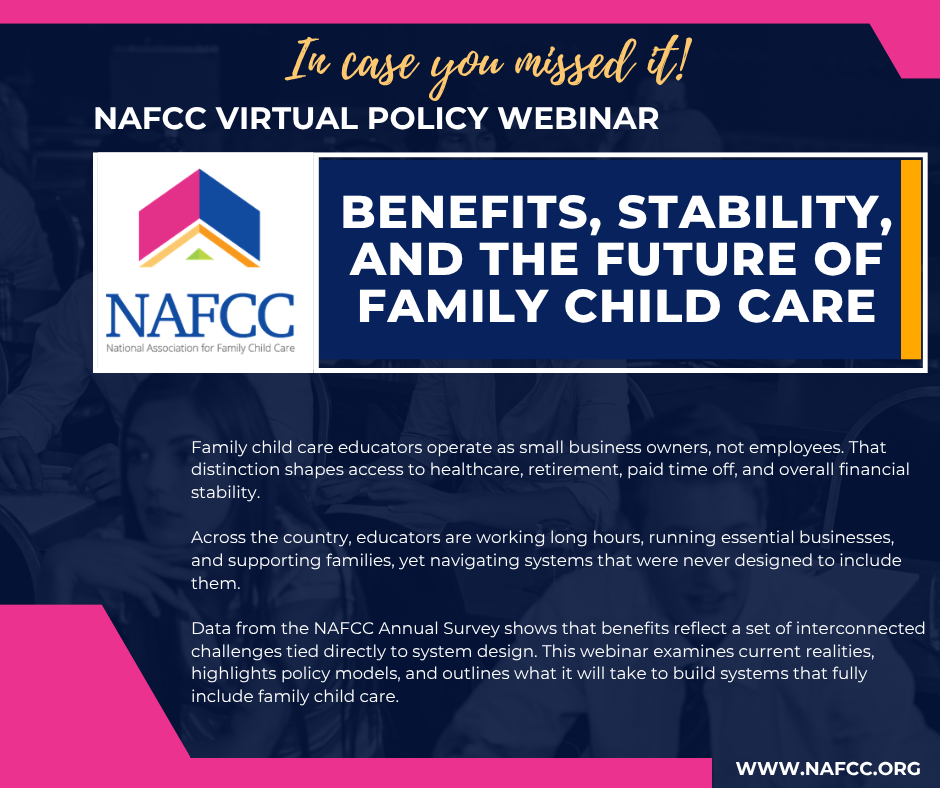
In Case You Missed It: NAFCC’s Latest Policy Webinar
NAFCC recently hosted “Benefits, Stability, and the Future of Family Child Care: Building Real Access to Healthcare and Retirement,” a national policy webinar focused on the growing challenges family child care educators face in accessing healthcare, retirement, paid leave, and other essential workforce supports.
The conversation explored how current systems often exclude self-employed family child care educators from traditional benefits structures and examined policy solutions, including portable benefits, Medicaid access, retirement models, paid leave systems, and other strategies designed to better support the FCC workforce.
Watch the replay here
Presentation Slides – English
Presentation Slides – Spanish
Stay informed and connected as we continue advancing policies that strengthen family child care sustainability, workforce stability, and long-term support for FCC educators nationwide.
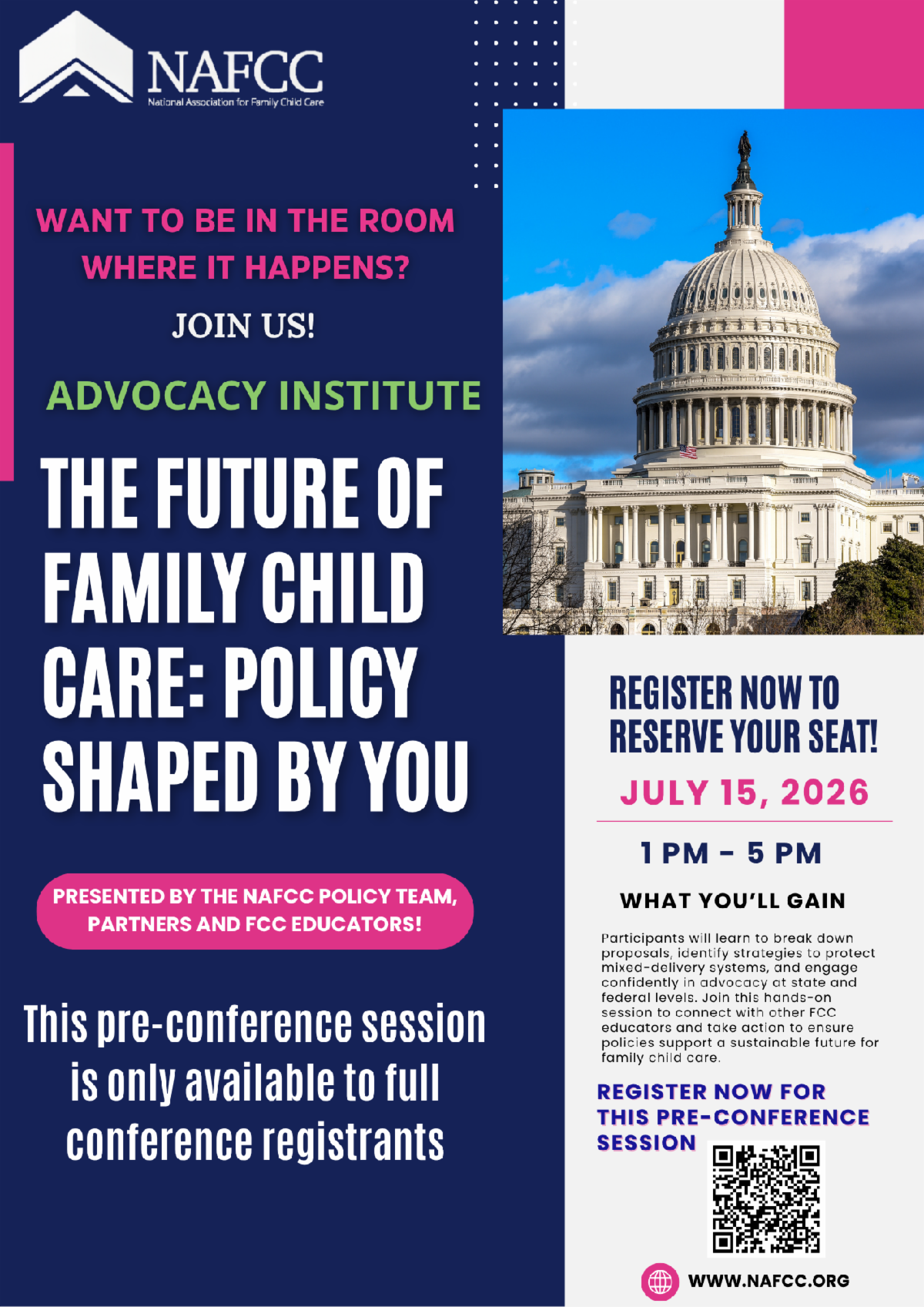
Want to be in the Room Where it Happens?
Join us in Chicago, Illinois, on Wednesday, July 15, from 1 to 5 PM for the National Association for Family Child Care Pre-Conference Advocacy Institute, The Future of Family Child Care: Policy Shaped by You.
In this hands-on session, educators will unpack the policies shaping the field, learn strategies to protect mixed-delivery systems, and build the confidence to advocate for family child care in the rooms where decisions are made.
When educators come together, change happens. Be in the room.
Space is limited to the first 50 registrants!
Register now for this pre-conference session
YOU MUST BE REGISTERED FOR THE FULL CONFERENCE TO ATTEND THIS PRE-CONFERENCE SESSION.
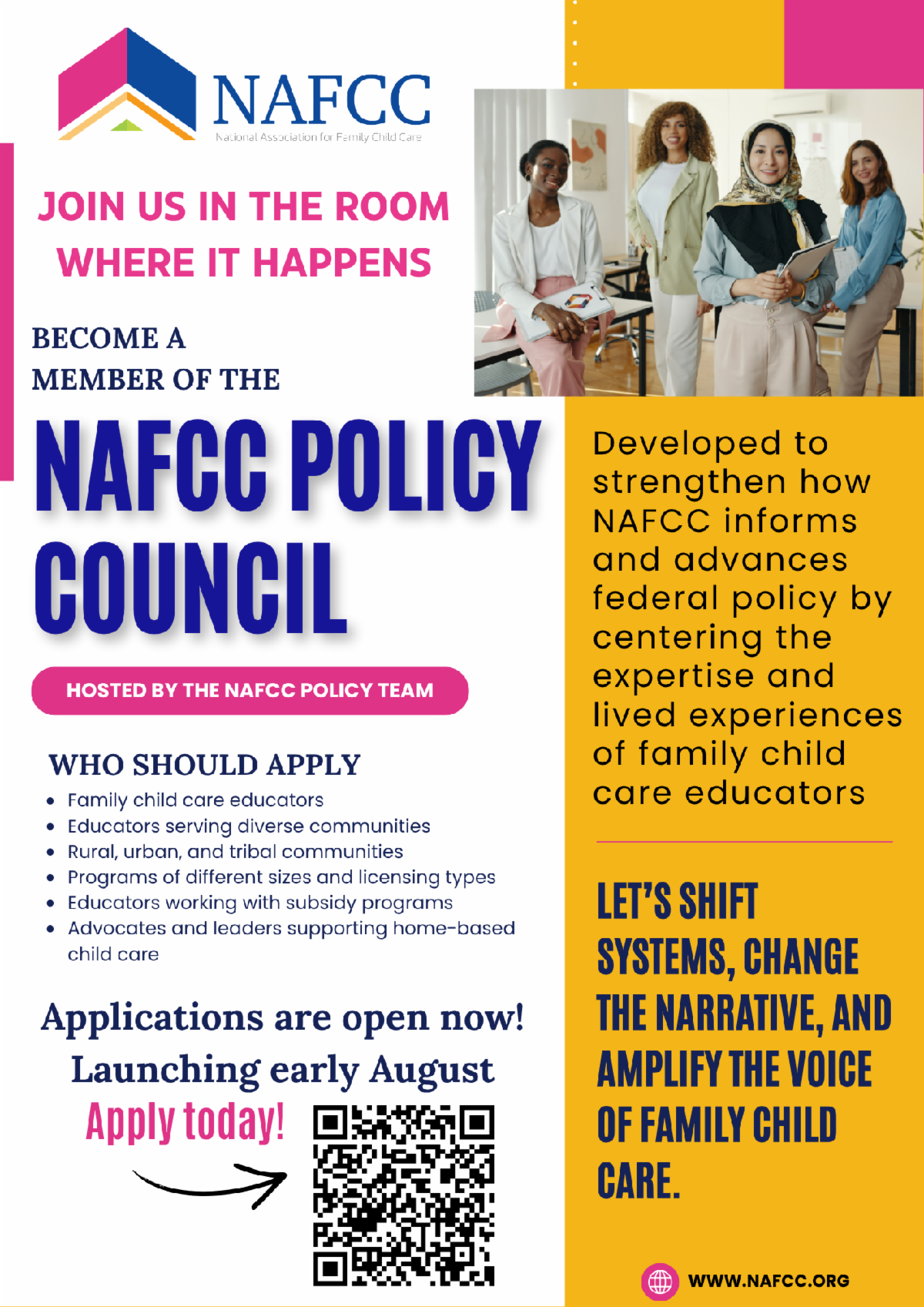
Applications are now open for the NAFCC Policy Council, a new initiative hosted by the NAFCC Policy Team designed to strengthen how NAFCC informs and advances federal policy by centering the expertise and lived experiences of family child care educators.
The Policy Council will bring together educators, advocates, and leaders from diverse communities, program types, and regions to help shape conversations around the future of family child care policy and advocacy. Participants will engage in discussions focused on systems change, narrative building, and elevating the voices of family child care educators nationwide.
Application Deadline: June 1, 2026
The council will officially launch in early August.

From the Director’s Desk
Recent national commentary from child care advocates and policy leaders highlights growing concern over how broader federal policy decisions are reshaping child care systems, often without directly naming child care itself. In NAFCC’s “We Can Take Care of Child Care — And We Must,” NAFCC Executive Director Erica Phillips and Director of Policy and Movement Building, Eboni Delaney, call for sustained investment and collective action to protect child care infrastructure and the educators holding it together.
In a separate op-ed published by The Opinion Pages, “Child Care Is Being Reshaped by Policies That Never Mention It,” Eboni Delaney and Daphne Alsiyao, NAFCC Policy Strategist, warn that changes related to immigration enforcement, Medicaid, and federal funding are creating ripple effects that destabilize family child care programs and the families relying on them.
Reports & Resources
Child Care Aware of America: 2025 Price & Supply Report
A new report from Child Care Aware of America finds that child care costs remain unaffordable for many families while child care supply continues to fall short of demand nationwide.
Read the report: Child Care in America: 2025 Price & Supply
The Century Foundation: States Advancing Child Care Affordability
A new report from The Century Foundation highlights how several states are investing in child care affordability, workforce supports, and supply-building strategies while emphasizing the continued need for federal investment.
Read the report: States Advancing Child Care Affordability
Minnesota Report on Family Child Care Educator Retention
A new Minnesota report shares feedback from former family child care educators and identifies financial strain, administrative burden, and system challenges as major reasons educators are leaving the field.
Report: Former FCCP Survey Report 2026
Press Release: Survey of Former Minnesota Family Child Care Providers
CLASP: Program Integrity and Accountability in CCDF
This brief from CLASP examines how states can strengthen accountability in the Child Care and Development Fund (CCDF) program while maintaining access for families and providers.
Read the brief: Program Integrity and Accountability in the Child Care and Development Fund Program
Center for American Progress: America’s Licensed Child Care Deserts
New resources from Center for American Progress explore child care supply gaps across the country and provide data tools to better understand where families continue to face limited access to licensed care.
Report: America’s Licensed Child Care Deserts
Executive Summary: Executive Summary
Interactive Map: Child Care Deserts Interactive Map
FFYF CCDBG State Fact Sheets
First Five Years Fund released updated CCDBG state fact sheets and advocacy tools with state-by-state data on child care funding and access.
State Fact Sheets: CCDBG State Sheets
National Fact Sheet: CCDBG National Fact Sheet
National Women’s Law Center: Warning Signs: State Child Care Assistance Policies 2025
A new report from National Women’s Law Center finds that child care assistance gaps are growing across the country, with rising waitlists, limited eligibility, and uneven provider payment policies continuing to affect families and early educators.
Read the report: Warning Signs: State Child Care Assistance Policies 2025
Media Coverage: The 74 – Families Left Scrambling Amid Growing Waitlists
CLASP Deep Dive: Head Start Compensation Requirements
This updated deep dive from CLASP explains a proposed federal rule that would remove compensation and benefits requirements added to Head Start standards in 2024.
Read more: Unpacking the Head Start Notice of Proposed Rule Making to Remove Compensation Requirements
CLASP Deep Dive: Final CCDF Rule Changes
An updated analysis from CLASP breaks down final federal changes to the Child Care and Development Fund (CCDF) that remove several state requirements established in 2024 and examines how the changes may affect child care systems and service delivery.
Read more: Unpacking the Child Care and Development Fund Notice of Proposed Rule Making
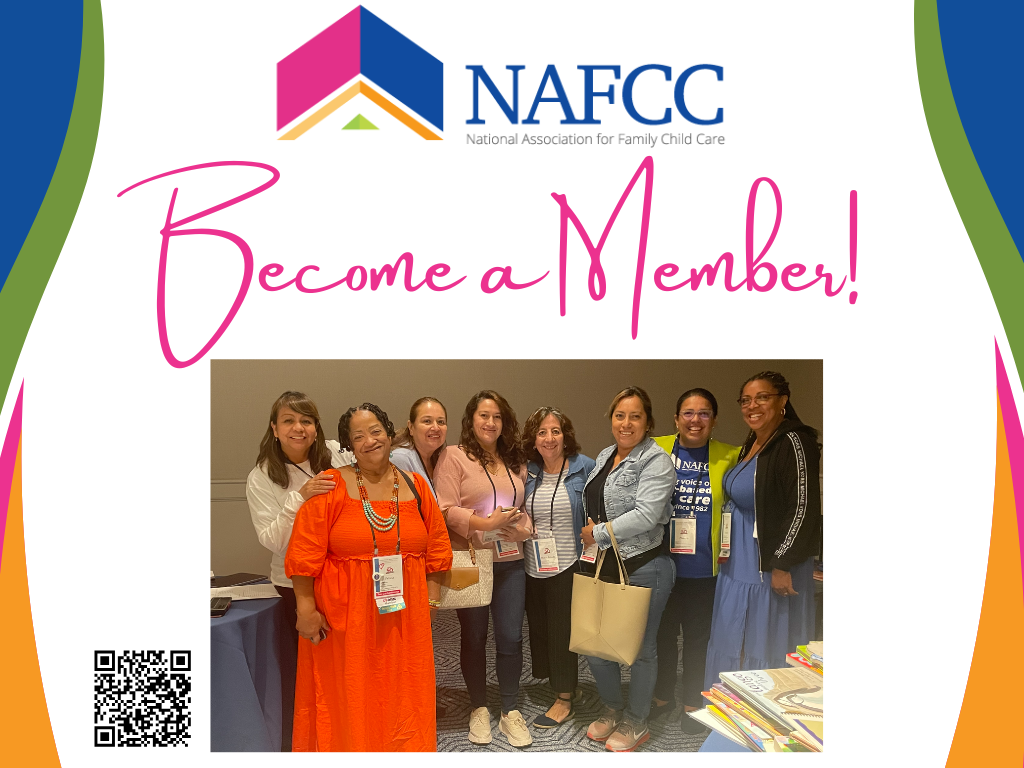
Not a Member Yet?
NAFCC’s impact is driven by the collective strength of family child care educators nationwide. Membership connects you to timely policy updates, professional resources, and opportunities to influence decisions that impact your work, business, and the families you serve. Join NAFCC and be part of a national community advancing family child care together.
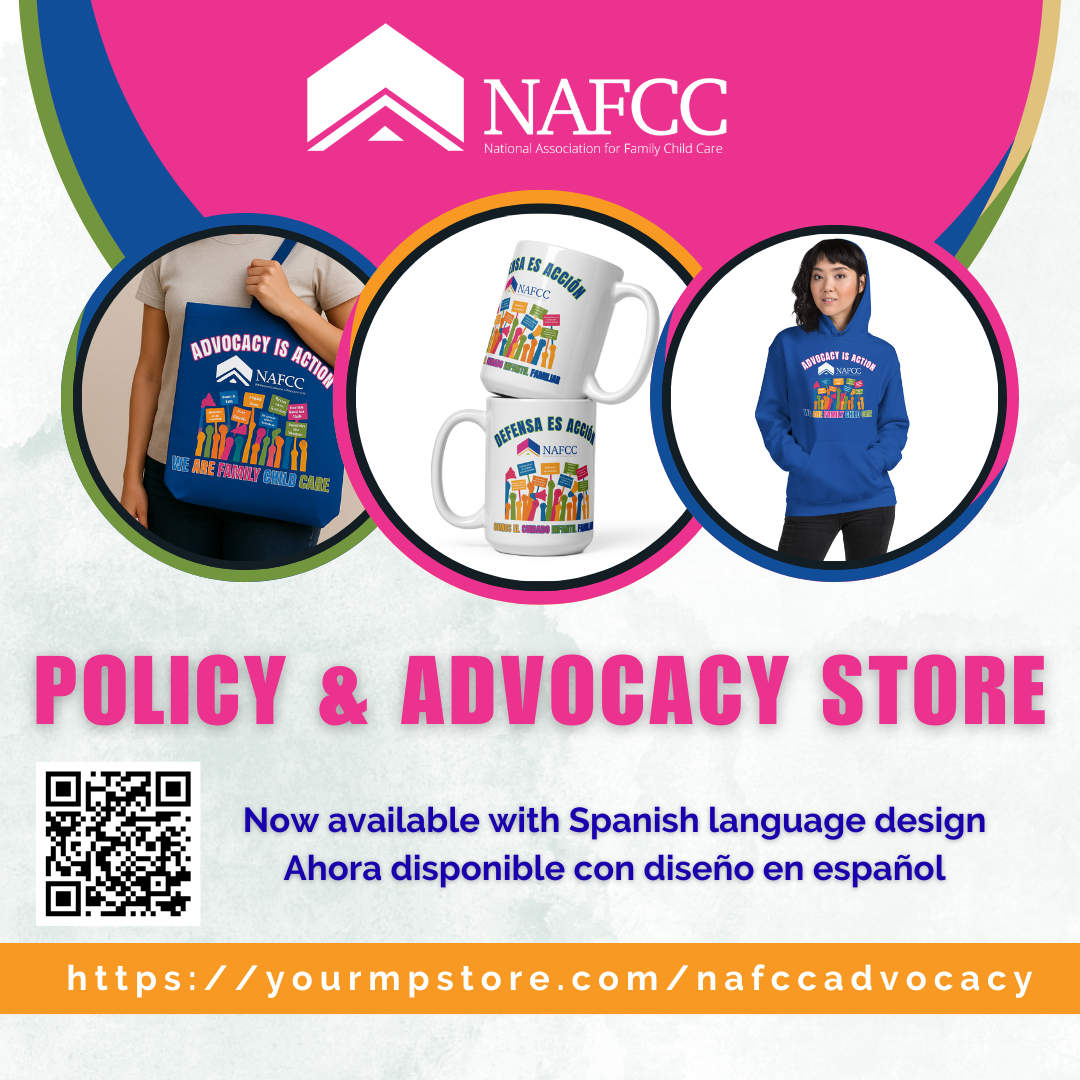
Shop the NAFCC Policy and Advocacy Store!
Whether you are just beginning your advocacy journey or you are a seasoned advocate, you have the power to show our collective strength. The Advocacy is Action collection is here with bold designs, meaningful messages, and gear that speaks for family child care.
All products are available in English and Spanish. Wear it, share it, and let your community know: Advocacy is Action, and we won’t be ignored.