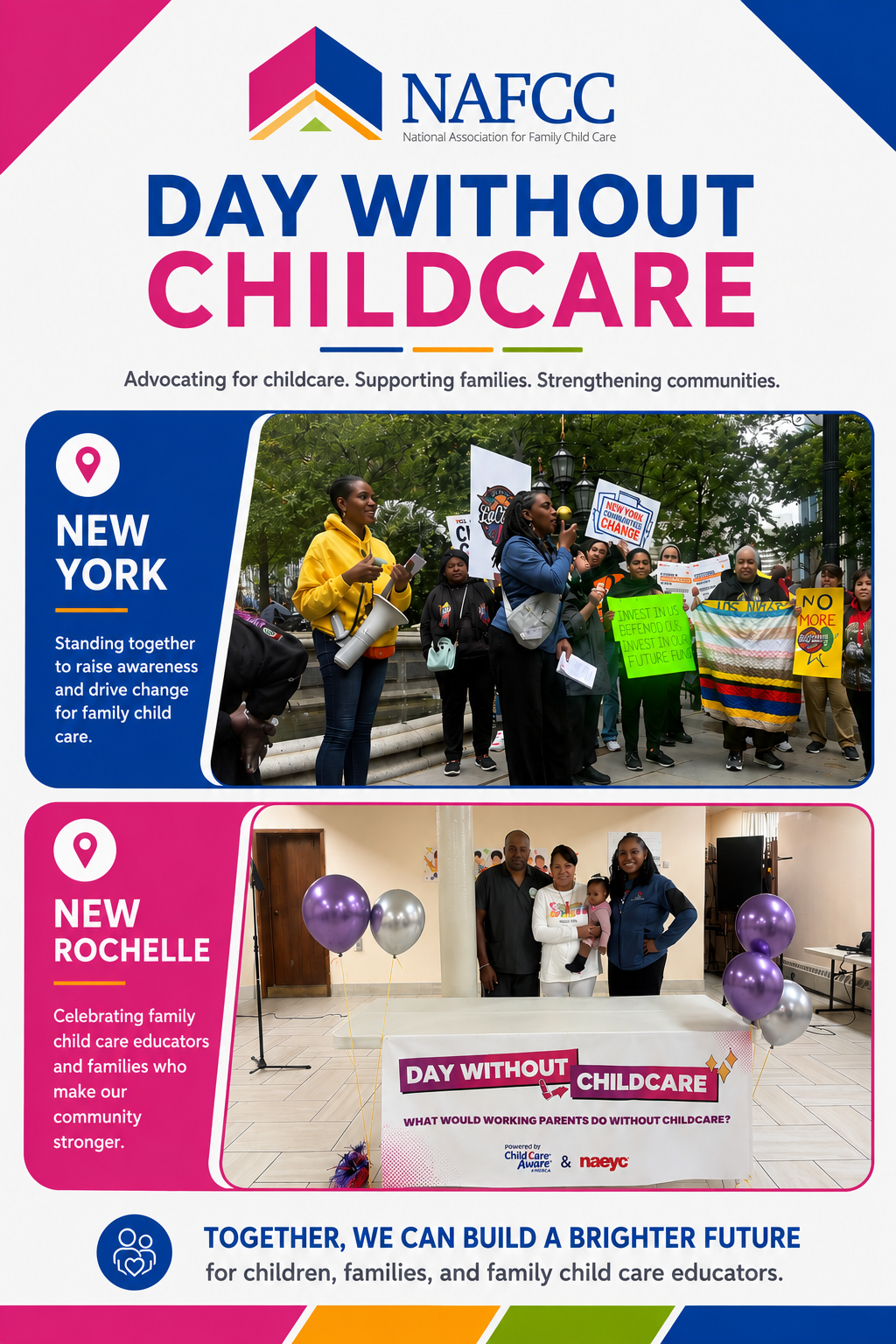
On May 11, educators, families, and communities across the country participated in Day Without Child Care 2026, a growing national movement designed to highlight what happens when child care is unavailable and to elevate the essential role early childhood educators play in the lives of children, families, communities, and the economy.
Now in its fifth year, Day Without Child Care has continued to grow in both visibility and urgency. This year, more than 3,850 educators and parents nationwide took part in closures, rallies, marches, and actions across more than 30 states and Washington, D.C., making it the largest work stoppage in child care organizing history. More than 77 events were held nationwide to call attention to the ongoing child care and affordability crisis impacting families and educators alike.
For the National Association for Family Child Care (NAFCC), the day represented more than a moment of awareness. It was an opportunity to continue elevating the voices and realities of family child care educators whose work remains foundational to communities across the country.
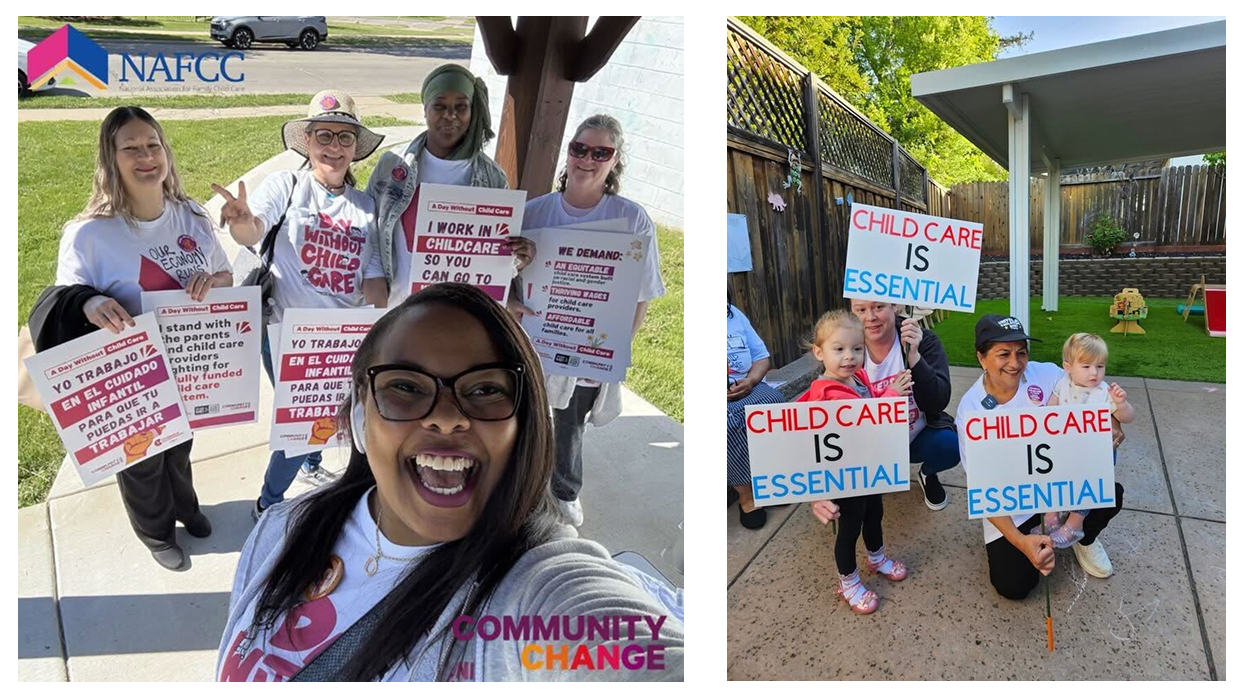
NAFCC Supports Day Without Child Care Efforts Nationwide
As part of this year’s efforts, NAFCC partnered with Community Change Action to provide $500 stipends to selected family child care educators hosting Day Without Child Care events in their communities.
The supported educators included:
- Benu Chabra, Benu’s Preschool — Concord, California
- Lenise Parker, MiMi’s Home Away from Home — Lebanon, Tennessee
- Kristy DeGraaf, The Learning Tree Family Child Care — Cedar City, Utah
- Shineal Hunter, Family Circle Academy — Philadelphia, Pennsylvania
- Mercedes Fleet-Mount, Bright Little Scholars — Philadelphia, Pennsylvania
- Shemik Sellars, Legacy-House Preschool — North Chesterfield, Virginia
Through both national partnerships and on-the-ground participation, NAFCC helped amplify the voices and experiences of family child care educators participating in Day Without Child Care events nationwide.
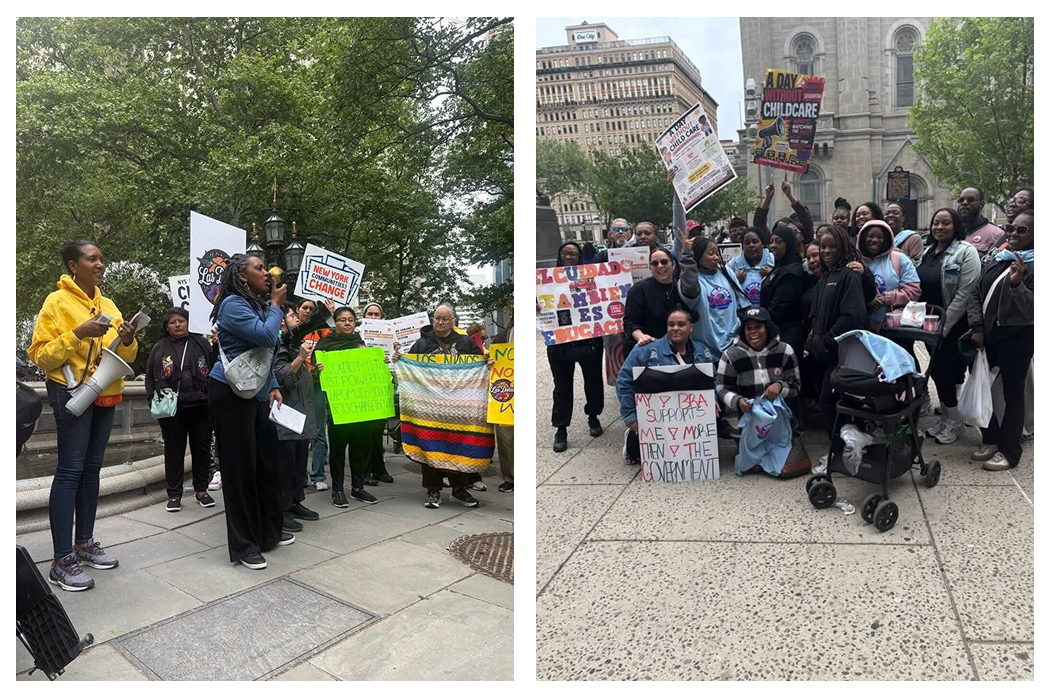
NAFCC Executive Director Erica Phillips also joined educators, families, and national partners in New York City for Day Without Child Care events and community gatherings focused on the future of child care and the importance of sustained investment in early childhood education.
The events created space for educators to share their experiences, connect with one another, and elevate the realities facing the child care sector nationwide. NAFCC was proud to stand alongside educators and organizations across the country working to ensure family child care remains visible, valued, and supported.
Why Day Without Child Care Continues to Matter
The message behind Day Without Child Care remains clear: without child care, work does not work.
Across the country, family child care educators continue to fill critical gaps in care, particularly for families working nontraditional hours, families in rural communities, and families seeking smaller, relationship-centered learning environments for their children.
At the same time, educators continue carrying increasing financial and operational burdens while families face rising costs and limited access to care. Organizers of this year’s Day Without Child Care noted that child care costs are outpacing rent in many communities, while educators are often expected to sustain the system without the long-term public investment necessary to keep it stable. (communitychangeaction.org)
The national day of action also highlighted the broader economic impact of child care instability. According to campaign organizers, the child care crisis costs the U.S. economy an estimated $172 billion each year due to lost earnings, productivity, and workforce disruptions. (communitychangeaction.org)
For family child care educators, these conversations are not new. They reflect realities educators navigate every day while continuing to provide nurturing, high-quality care and education for children and families.
Continuing the Work Beyond May 11
While Day Without Child Care is a single day of action, the impact and conversations extend far beyond one day.
At NAFCC, we remain committed to supporting and elevating family child care educators through advocacy, professional recognition, community building, and continued efforts to strengthen the family child care profession nationwide.
This year’s Day Without Child Care served as another reminder that family child care educators are essential to children, families, communities, and the economy. Their work allows parents to work, businesses to operate, and communities to thrive.
As conversations around child care continue nationwide, NAFCC will continue working alongside educators and partners to ensure family child care remains part of the national conversation and part of long-term solutions for the future of child care in America.
Because when child care disappears, communities feel it immediately. And when family child care educators are supported, children, families, and communities are stronger because of it.