Women’s History Month and International Women’s Day are meant to recognize the achievements and contributions of women around the world, as well as the role they play in sustaining communities, economies, and institutions. One place where that contribution is clearly visible is in family child care.
Across countries and cultures, family child care exists because women built it. In homes, apartments, and small neighborhood programs, women have created spaces where children are cared for, families are supported, and communities remain connected. For many working parents, these programs make it possible to maintain employment and stability while knowing their children are in trusted environments.
Care itself operates as a universal language among women. Even when words, policies, and systems differ, the act of caring for children carries a shared meaning. It reflects responsibility, protection, and the understanding that communities depend on the well-being of future generations. UN Women reports that “across countries and cultures, women remain the primary caregivers for children, reflecting social norms that connect women to caregiving roles in families and communities.”
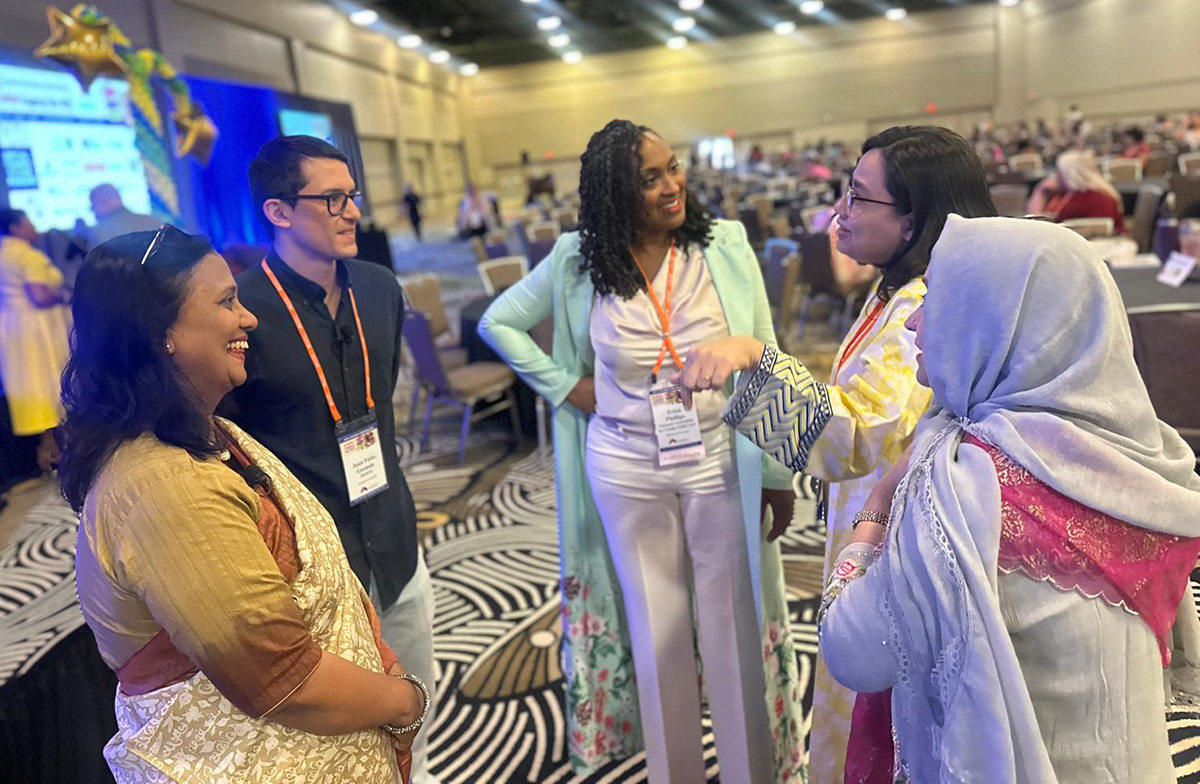
Last year, I had the opportunity to support the National Association for Family Child Care Home-Based Family Child Care Global Learning Convening, led by Director of Strategic Partnerships and Market Solutions, Zakenya Neely, which brought together family child care leaders from several countries. The convening provided educators, advocates, and system leaders with an opportunity to share how family child care operates across different national contexts while learning from one another’s experiences.
Despite differences in language, policy environments, and funding structures, a consistent theme emerged throughout the conversations. In most instances, women are the foundation of family child care systems worldwide.
In many places, family child care has developed in response to community needs rather than through formal design. Women opened their homes to care for children so neighbors could work, families could pursue opportunity, and local economies could function. Over time, those informal networks grew into recognized parts of early childhood national systems.
Today, family child care remains one of the most accessible and flexible forms of care available to families. It often serves parents with nontraditional work hours, families in rural communities, and neighborhoods where larger child care centers are limited or unavailable. In these settings, family child care educators are not only caregivers. They are small business owners, early learning professionals, and community anchors.
During the convening, participants shared how this work shows up in their own countries. Participants described networks of home-based educators who support one another through training, mentorship, and shared resources. Leaders from the United States reflected on the growing recognition that family child care plays a critical role in strengthening the broader child care system. What connected these conversations was not only the work itself but the leadership behind it.
Women are designing programs, mentoring new educators, organizing networks, and advocating for policies that strengthen family child care. In many cases, they are doing this work while continuing to operate their own programs and support the families who rely on them each day.

Across cultures and continents, the work may look different on paper, but the practice is deeply familiar. A child being welcomed into a home, a meal being prepared, a story being read, a parent leaving for work knowing their child is safe. These acts of care translate across languages and borders. Caring for children becomes a shared language that women speak in communities everywhere.
As we celebrate the achievements and contributions of women across the world, we should also consider how systems can better support the women who sustain family child care every day. That means elevating their voices in policy conversations, investing in the systems that support their work, and advancing inclusive policies that recognize family child care as an essential part of early learning and community stability. When women who lead family child care are supported, families, children, and communities benefit everywhere.
Eboni Delaney is the Director of Policy and Movement Building at the National Association for Family Child Care (NAFCC), and a Public Voices Fellow of the OpEd Project in Partnership with the National Black Child Development Institute.