Written by Eboni Delaney, Director of Policy and Movement Building
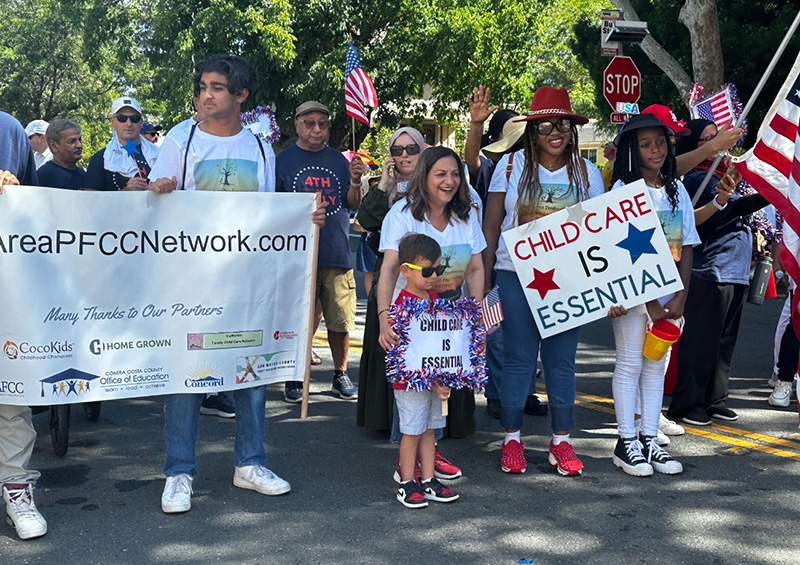
For nearly four decades, Benu Chhabra has dedicated her life to children, families, and the family child care profession. As the owner of Benu’s Preschool, founder of Bay Area Professional Family Child Care Network (BAPFCCN), and a leader at the local, state, and national levels, she has spent years ensuring that family child care educators have a voice in the decisions that impact their work.
Her journey began with a simple goal: finding a way to care for children while caring for her own family.
“I became a licensed family child care educator because, as a parent, I experienced how challenging and expensive child care could be. I wanted to create a safe, loving, and affordable place for children while also being present for my own family.”
What started as a practical solution soon became something much larger.
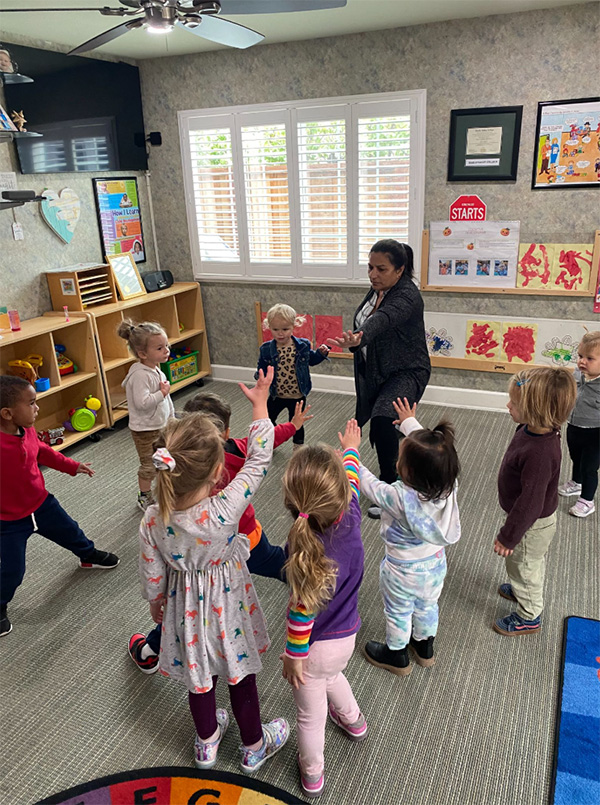
“Over the years, this work has become my passion and a way to serve my community.”
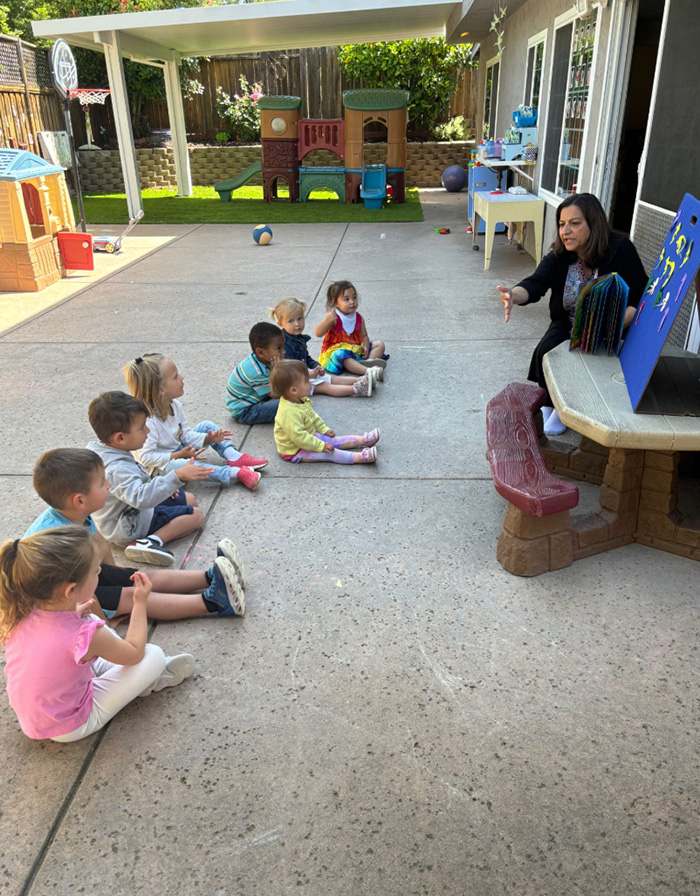
For 26 years, Benu has operated her family child care program, supporting children through some of their earliest and most important years. Along the way, she has become a trusted resource for families, a mentor to fellow educators, and a respected advocate across California.
“Even with the challenges, long hours, and sacrifices, I continue because I know the positive impact I make in children’s lives and the support I provide to families.”
That impact extends far beyond her own program.
As the founder and leader of BAPFCCN, Benu works to support family child care educators through leadership development, advocacy, and community building.
She serves as Treasurer of the California Family Child Care Network and as a Board Member-at-Large for the National Association for Family Child Care (NAFCC). She is a frequent presenter at local, state, and national conferences and has spent years helping elevate the voices of family child care educators in policy conversations.
Her commitment has not gone unnoticed.
“I was honored with a proclamation from my mayor declaring May 24, 2025, in Concord, California, in recognition of my work.”
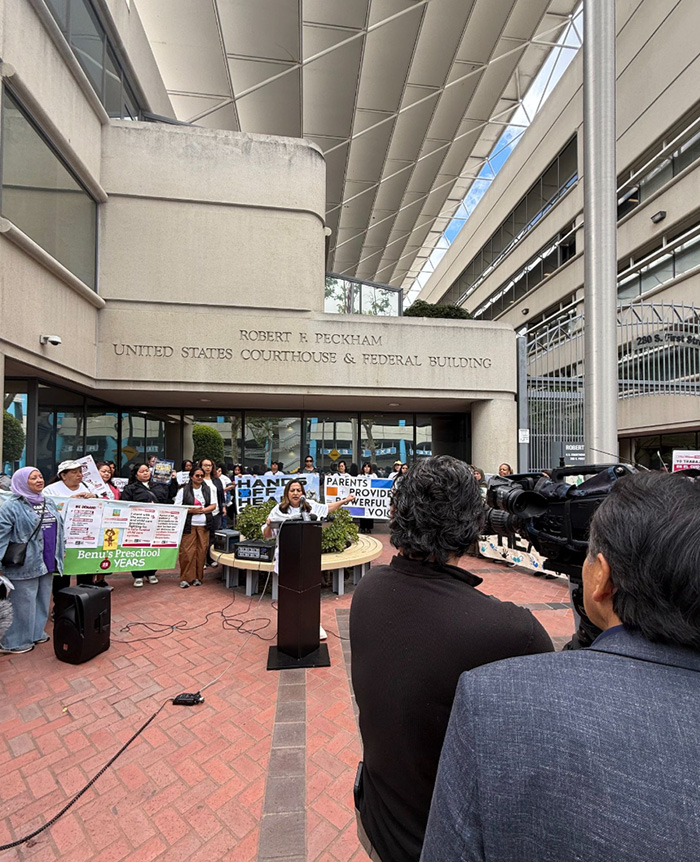
Today, Benu’s advocacy is focused on an issue affecting family child care educators across California: the state’s 80/20 rule.
Under current regulations, family child care educators must remain on site for at least 80 percent of their operating hours each day, even when a qualified substitute is available. While intended to support continuity of care, the regulation often leaves educators with little flexibility to respond to personal or family emergencies. Through her work with educators across California, Benu has seen the impact firsthand.
During our conversation, Benu shared that her husband, who also serves as her helper in the program, was admitted to the emergency room and scheduled for emergency surgery the following day.
Knowing that she could not easily leave her program without shutting down care for families and losing income, he delayed telling her what was happening. She only learned later in the day that he had been hospitalized.
When she finally made it to the hospital, overwhelmed by fear and stress, she herself was later admitted for medical care. In both cases, the program had to be closed completely. Families lost care. Income was lost. And two people navigating a medical emergency were forced to carry the added burden of a system that gave them virtually no flexibility to respond to their medical needs and other basic human rights.
Another educator shared with Benu that she missed chemotherapy appointments because she could not afford to close her program. For Benu and family child care educators across California, these stories represent a larger issue.
The stories Benu shared are part of a larger reality facing family child care educators nationwide. NAFCC’s 2025-2026 Annual Survey found that retirement, access to paid time off, and health insurance are among the most significant challenges educators face. Operating as small business owners, many family child care educators do not have access to employer-sponsored benefits, paid leave, or the flexibility many workers rely on during personal or family emergencies. Yet they are individually expected to provide uninterrupted care every day.
“The issue is not accountability. Family child care educators support health and safety standards, continuity of care, and high-quality programs. The issue is whether educators have enough flexibility to care for themselves and their families without jeopardizing their livelihood.”
Benu believes family child care educators should never have to choose between their health and their profession.
“No one should have to postpone medical care, miss chemotherapy treatments, delay surgery, or ignore their own health because they cannot leave work for a few hours without financial devastation.”
For nearly 40 years, Benu has advocated for children, families, and fellow educators.
Through her leadership, she continues to remind policymakers and systems leaders that family child care educators are not only business owners and educators. They are people.
“Family child care educators are humans first. We deserve the ability to care for ourselves, care for our loved ones, respond to emergencies, and protect our health without risking the businesses and programs families depend on.”
Her message is simple but powerful. When family child care educators thrive, children, families, and communities thrive.
The unfortunate reality is that systems affecting family child care continue to be built without the voice of family child care educators. That must change.
The solution is clear. California can maintain strong health and safety standards while adopting substitute policies that are practical, enforceable, and responsive to the realities of family child care. Educators should be permitted to maintain substitute documentation onsite and provide records during inspections or investigations.
California should also align with peer states by applying the 80/20 standard weekly or monthly rather than a daily calculation, ensuring educators can utilize these pre-qualified substitutes when attending medical appointments, caring for family members, participating in professional development, or responding to emergencies. These changes would preserve accountability and child safety while these changes would preserve accountability and child safety while ensuring family child care educators can tend to occasional personal needs.
Family child care educators need policies that support both compliance and continuity of care so they can continue serving the children and families who depend on them every day.
Benu’s advocacy is grounded in a simple belief: family child care educators deserve to be in the room where it happens.
Family child care educators belong at every table where decisions are being made about funding, licensing, quality systems, workforce policies, and the future of early childhood education, as partners, leaders, and experts.